what is the first process to occur in the digestive system quizlet
On this page:
- What is the digestive arrangement?
- Why is digestion important?
- How does my digestive system work?
- How does food move through my GI tract?
- How does my digestive arrangement pause food into small parts my body can use?
- What happens to the digested nutrient?
- How does my body control the digestive process?
- Clinical Trials
What is the digestive organisation?
The digestive system is made upward of the alimentary canal—also called the GI tract or digestive tract—and the liver, pancreas, and gallbladder. The GI tract is a series of hollow organs joined in a long, twisting tube from the mouth to the anus. The hollow organs that make up the GI tract are the mouth, esophagus, stomach, small intestine, large intestine, and anus. The liver, pancreas, and gallbladder are the solid organs of the digestive system.
The small intestine has iii parts. The beginning part is called the duodenum. The jejunum is in the middle and the ileum is at the terminate. The large intestine includes the appendix, cecum, colon, and rectum. The appendix is a finger-shaped pouch attached to the cecum. The cecum is the offset office of the big intestine. The colon is next. The rectum is the terminate of the large intestine.
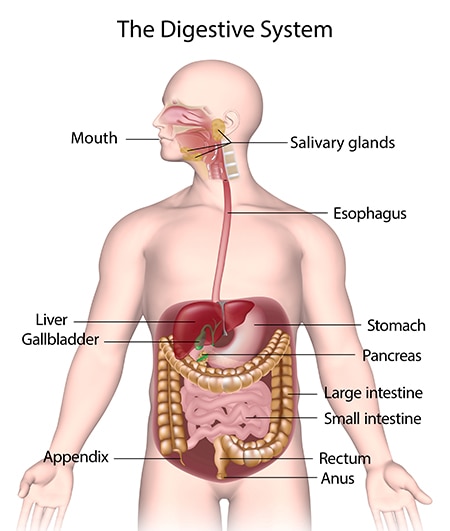
Bacteria in your GI tract, also called gut flora or microbiome, help with digestion. Parts of your nervous and circulatory systems likewise assist. Working together, nerves, hormones, leaner, blood, and the organs of your digestive system digest the foods and liquids yous swallow or drink each twenty-four hours.
Why is digestion important?
Digestion is important because your body needs nutrients from food and drink to work properly and stay healthy. Proteins, fats, carbohydrates, vitamins, minerals, and h2o are nutrients. Your digestive organisation breaks nutrients into parts small plenty for your body to absorb and use for free energy, growth, and jail cell repair.
- Proteins break into amino acids
- Fats interruption into fatty acids and glycerol
- Carbohydrates intermission into elementary sugars
MyPlate offers ideas and tips to help y'all see your individual health needs.
How does my digestive system piece of work?
Each part of your digestive system helps to movement food and liquid through your GI tract, break food and liquid into smaller parts, or both. One time foods are broken into small plenty parts, your body can absorb and movement the nutrients to where they are needed. Your large intestine absorbs water, and the waste products of digestion go stool. Nerves and hormones aid control the digestive procedure.
The digestive process
| Organ | Movement | Digestive Juices Added | Food Particles Broken Down |
|---|---|---|---|
| Rima oris | Chewing | Saliva | Starches, a type of carbohydrate |
| Esophagus | Peristalsis | None | None |
| Stomach | Upper muscle in stomach relaxes to let food enter, and lower musculus mixes food with digestive juice | Tummy acid and digestive enzymes | Proteins |
| Pocket-sized intestine | Peristalsis | Minor intestine digestive juice | Starches, proteins, and carbohydrates |
| Pancreas | None | Pancreatic juice | Carbohydrates, fats, and proteins |
| Liver | None | Bile | Fats |
| Large intestine | Peristalsis | None | Bacteria in the large intestine can also pause down food. |
How does nutrient move through my GI tract?
Food moves through your GI tract by a process called peristalsis. The large, hollow organs of your GI tract contain a layer of muscle that enables their walls to motility. The movement pushes food and liquid through your GI tract and mixes the contents within each organ. The muscle behind the food contracts and squeezes the food frontwards, while the muscle in front end of the nutrient relaxes to allow the food to move.
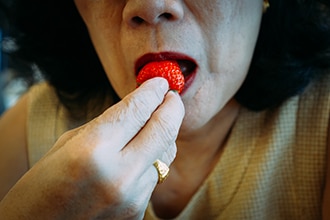
Oral fissure. Food starts to motility through your GI tract when you eat. When you lot swallow, your tongue pushes the nutrient into your pharynx. A small flap of tissue, called the epiglottis, folds over your windpipe to preclude choking and the food passes into your esophagus.
Esophagus. Once you begin swallowing, the process becomes automatic. Your brain signals the muscles of the esophagus and peristalsis begins.
Lower esophageal sphincter. When food reaches the end of your esophagus, a ringlike muscle—called the lower esophageal sphincter —relaxes and lets nutrient laissez passer into your stomach. This sphincter ordinarily stays airtight to keep what's in your stomach from flowing dorsum into your esophagus.
Breadbasket. After nutrient enters your stomach, the breadbasket muscles mix the food and liquid with digestive juices. The stomach slowly empties its contents, chosen chyme, into your minor intestine.
Small intestine. The muscles of the small intestine mix nutrient with digestive juices from the pancreas, liver, and intestine, and push the mixture forward for further digestion. The walls of the small intestine absorb water and the digested nutrients into your bloodstream. Every bit peristalsis continues, the waste products of the digestive process motion into the big intestine.
Large intestine. Waste matter products from the digestive process include undigested parts of nutrient, fluid, and older cells from the lining of your GI tract. The big intestine absorbs h2o and changes the waste material from liquid into stool. Peristalsis helps motion the stool into your rectum.
Rectum. The lower end of your large intestine, the rectum, stores stool until information technology pushes stool out of your anus during a bowel motion.
Lookout this video to see how food moves through your GI tract.
How does my digestive system break food into pocket-sized parts my torso can use?
Every bit nutrient moves through your GI tract, your digestive organs break the food into smaller parts using:
- motion, such every bit chewing, squeezing, and mixing
- digestive juices, such every bit stomach acrid, bile, and enzymes
Oral fissure. The digestive process starts in your mouth when you chew. Your salivary glands make saliva, a digestive juice, which moistens food so information technology moves more easily through your esophagus into your stomach. Saliva also has an enzyme that begins to intermission down starches in your food.
Esophagus. Afterwards you swallow, peristalsis pushes the nutrient downwardly your esophagus into your stomach.
Stomach. Glands in your tummy lining make stomach acrid and enzymes that break down food. Muscles of your stomach mix the food with these digestive juices.
Pancreas. Your pancreas makes a digestive juice that has enzymes that intermission downwards carbohydrates, fats, and proteins. The pancreas delivers the digestive juice to the small intestine through pocket-sized tubes called ducts.
Liver. Your liver makes a digestive juice called bile that helps assimilate fats and some vitamins. Bile ducts carry bile from your liver to your gallbladder for storage, or to the minor intestine for use.
Gallbladder. Your gallbladder stores bile between meals. When you consume, your gallbladder squeezes bile through the bile ducts into your small intestine.
Small intestine. Your small intestine makes digestive juice, which mixes with bile and pancreatic juice to complete the breakdown of proteins, carbohydrates, and fats. Bacteria in your small intestine make some of the enzymes you need to digest carbohydrates. Your minor intestine moves water from your bloodstream into your GI tract to aid break downwards food. Your minor intestine also absorbs water with other nutrients.
Large intestine. In your large intestine, more h2o moves from your GI tract into your bloodstream. Bacteria in your large intestine help suspension down remaining nutrients and make vitamin Chiliad. Waste products of digestion, including parts of nutrient that are still too large, get stool.
What happens to the digested food?
The small intestine absorbs most of the nutrients in your food, and your circulatory system passes them on to other parts of your torso to store or utilize. Special cells help absorbed nutrients cross the intestinal lining into your bloodstream. Your blood carries elementary sugars, amino acids, glycerol, and some vitamins and salts to the liver. Your liver stores, processes, and delivers nutrients to the residuum of your body when needed.
The lymph organisation, a network of vessels that carry white claret cells and a fluid called lymph throughout your body to fight infection, absorbs fatty acids and vitamins.
Your trunk uses sugars, amino acids, fat acids, and glycerol to build substances y'all need for energy, growth, and prison cell repair.
How does my trunk control the digestive process?
Your hormones and fretfulness work together to help control the digestive procedure. Signals flow within your GI tract and dorsum and forth from your GI tract to your brain.
Hormones
Cells lining your stomach and small intestine brand and release hormones that control how your digestive organisation works. These hormones tell your body when to brand digestive juices and send signals to your brain that you are hungry or full. Your pancreas also makes hormones that are of import to digestion.
Fretfulness
You have fretfulness that connect your cardinal nervous organisation—your encephalon and spinal cord—to your digestive organisation and control some digestive functions. For case, when you come across or smell food, your brain sends a signal that causes your salivary glands to "brand your mouth water" to prepare you to eat.
You lot also have an enteric nervous organisation (ENS)—nerves within the walls of your GI tract. When food stretches the walls of your GI tract, the nerves of your ENS release many different substances that speed upwards or filibuster the movement of food and the production of digestive juices. The nerves send signals to control the actions of your gut muscles to contract and relax to push food through your intestines.
Clinical Trials
The National Institute of Diabetes and Digestive and Kidney Diseases (NIDDK) and other components of the National Institutes of Health (NIH) carry and back up enquiry into many diseases and conditions.
What are clinical trials, and are they correct for you?
Sentinel a video of NIDDK Director Dr. Griffin P. Rodgers explaining the importance of participating in clinical trials.
What clinical trials are open?
Clinical trials that are currently open and are recruiting can be viewed at www.ClinicalTrials.gov.
Source: https://www.niddk.nih.gov/health-information/digestive-diseases/digestive-system-how-it-works
0 Response to "what is the first process to occur in the digestive system quizlet"
Post a Comment